In 2025, ERP is still the digital backbone of most manufacturing businesses – but very few leaders feel it gives the real-time, plant-level visibility they actually need. Instead of ripping and replacing SAP or Oracle, forward-thinking manufacturers are layering modern platforms on top to close critical gaps in data, visibility, and decision-making.
The problem: ERP was never designed to see everything on the shop floor
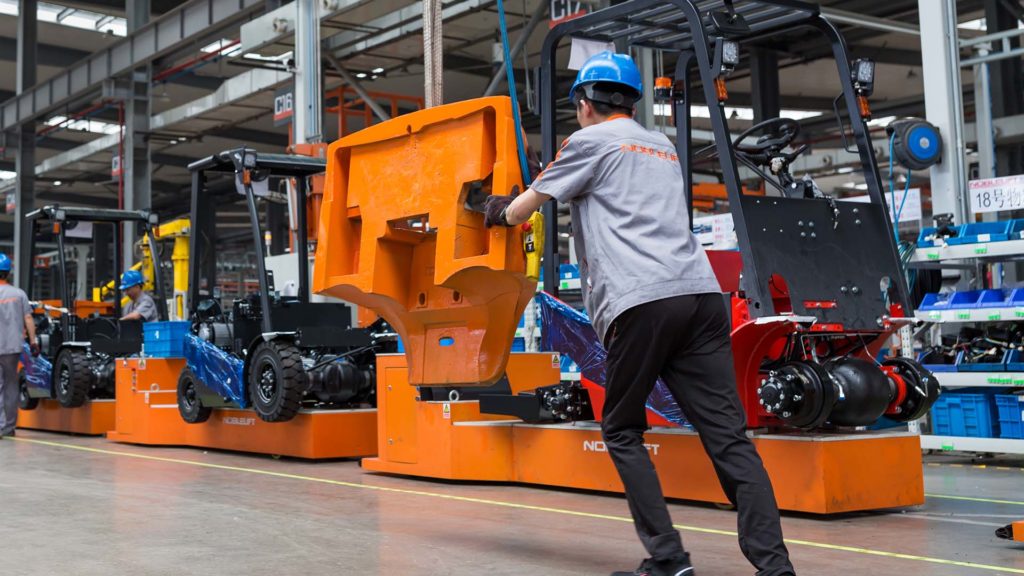
Most ERPs were implemented to handle finance, standard processes, and basic supply chain – not messy, noisy, real-world production lines. As a result, operations teams still rely on:
- Paper job cards and whiteboards for scheduling
- Excel trackers for WIP, quality issues, and downtime
- Manual reporting to bridge the gap between machines, MES, and ERP
This leaves senior leaders dealing with delayed data, inconsistent KPIs, and “Excel truth” that rarely matches what ERP says. Replacing ERP to fix this is slow, risky, and expensive – and often just recreates the same blind spots in a new system.
Trend in 2025: Layering specialised platforms on top of core ERP
A key ERP trend for 2025 is using cloud platforms, AI, and IoT “on top” of SAP/Oracle to deliver real-time visibility and analytics, without touching the core transactional engine. Analysts describe this as ERP becoming the “system of record”, with specialised tools providing a live, operations-facing “system of engagement”.
For manufacturers, this layered approach means:
- Keeping SAP or Oracle as the stable backbone for finance, orders, and inventory
- Connecting machines, PLCs, scanners, and point systems into a unified data layer
- Feeding cleaned, contextualised data back into ERP and into real-time dashboards
This is exactly where a platform like WrxFlo fits – sitting between the shop floor, logistics and finance, and the existing ERP, so operations teams finally see how the whole value chain is performing in real time.
How WrxFlo closes the “Integration Gap”
WrxFlo is designed to integrate with ERPs without forcing you into a risky, multi-year migration. It connects to existing databases, APIs, and machine data so that all operational events – downtime, rework, delays, exceptions – are visible on a single platform.
Typical gains for manufacturing leaders include:
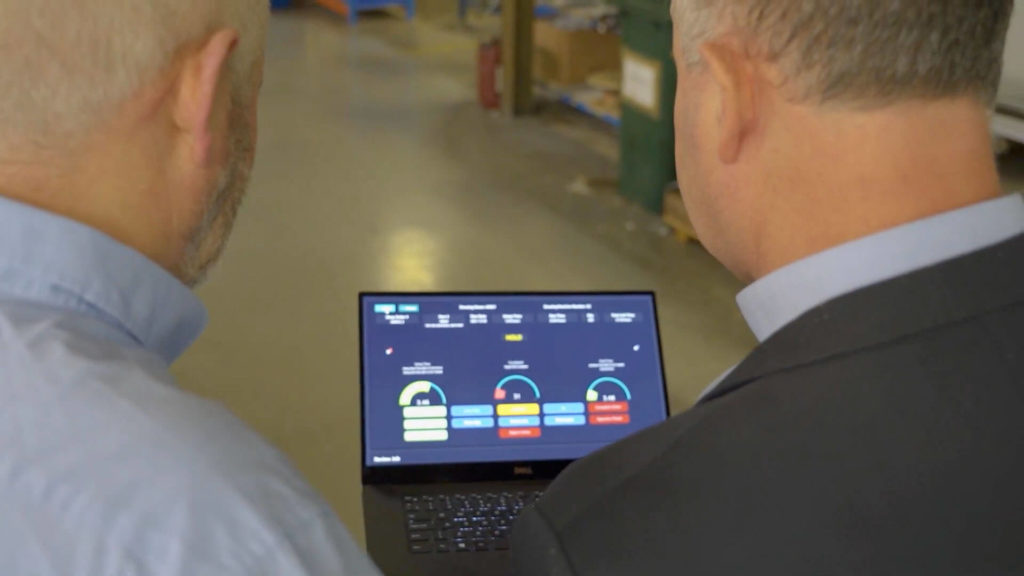
- Real-time production and logistics dashboards that actually reflect what is happening now, not last week
- Automated data capture from the shop floor, reducing manual entry into SAP/Oracle and cutting errors
- AI-driven insights and alerts layered on top of ERP data, flagging bottlenecks, late orders, and margin risk early
This Integration visibility turns ERP from a static record of what happened into a live decision engine for operations, finance and supply chain.
Why “fix, don’t replace” is the smarter strategy in 2025
Most manufacturers will continue investing in ERP through 2025 and beyond – but the biggest gains are coming from modernising around ERP, not replacing it. The case for layering a platform like WrxFlo instead of swapping ERP is compelling:
- Lower risk: No disruption to core finance and transactional processes
- Faster value: First dashboards and use cases typically live in months, not years
- Higher agility: New plants, product lines or customers can be onboarded without reengineering ERP
For CEOs, COOs and CFOs, the question is no longer “Do we need a new ERP?” – it is “How do we make the one we have actually work for operations?”. In 2025, fixing your ERP gaps with an integrated platform like WrxFlo is the practical way to unlock AI, real-time analytics, and better decisions without betting the business on a rip-and-replace project.